
English| EUR
Suggested for you
More currencies
Choose a language
Blue Spring State Park offers one of Florida's clearest spring-fed waterways, but the park itself does not operate an on-site kayak rental concession. Visitors planning a self-guided paddle along the St. Johns River must arrange rentals through nearby outfitters in Orange City or Deltona, then transport craft to the park's designated launch area. This guide covers verified rental sources, launch protocols, and the rules that govern paddle craft within park boundaries.
Quick answer
Blue Spring State Park does not rent kayaks directly; visitors must secure rentals from outfitters in Orange City or Deltona, typically priced between 35 and 55 USD for a half-day single kayak. All paddle craft launch from the boardwalk ramp near the park's west boundary, and self-guided trips are restricted to the St. Johns River corridor—entry into the spring run itself is prohibited year-round to protect the manatee refuge.
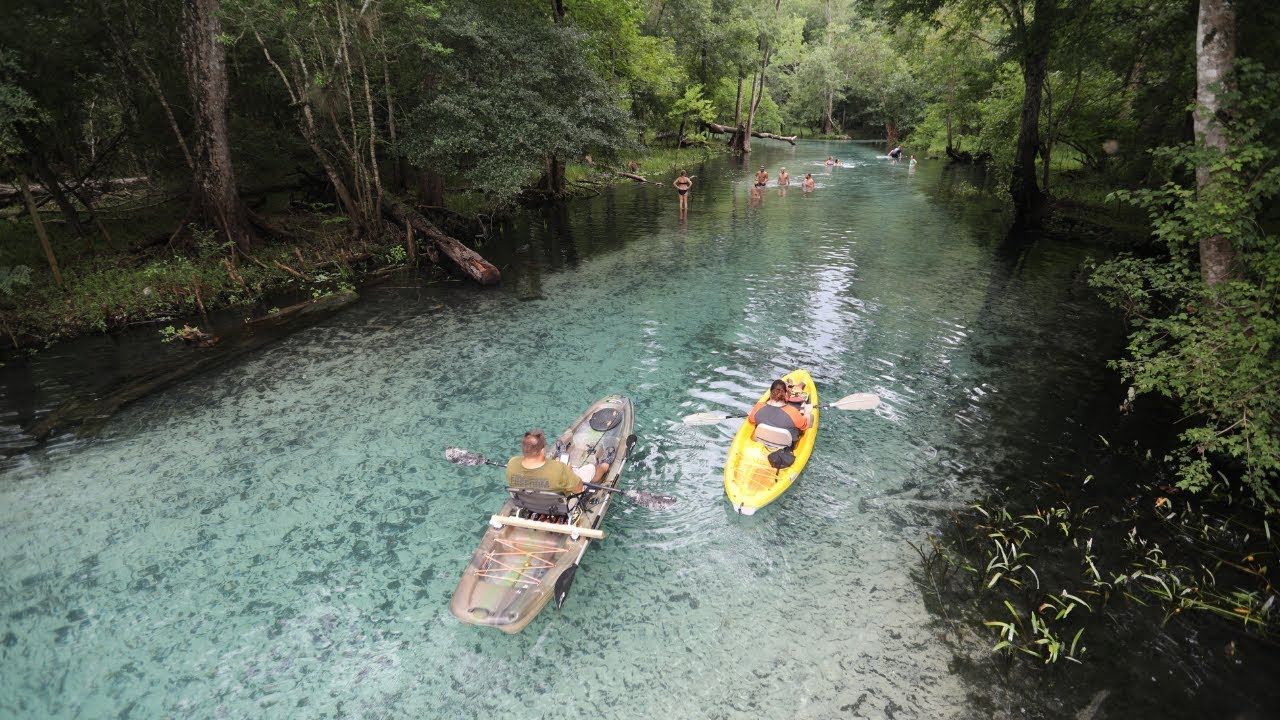
Blue Spring discharges more than 100 million gallons of 72-degree water daily into the St. Johns River, creating a ribbon of gin-clear flow visible from the boardwalk that parallels the spring run. That clarity ends where the spring meets the tannic river, and it is the river—not the spring—that paddlers navigate during a blue spring kayak rental trip. The park maintains a single launch point: a concrete ramp and floating dock at the western edge of the property, adjacent to the campground road. No commercial concessionaire operates inside the park, so every kayak, canoe, or stand-up paddleboard arrives either on a visitor's vehicle or through a delivery arrangement with an outfitter based in Orange City, roughly four miles west. Regional providers typically offer half-day and full-day rates, with tandem kayaks priced ten to fifteen dollars above solo models. Most include paddles, personal flotation devices, and a dry bag in the base rate; a few offer shuttle service that eliminates the need to return the craft to the origin point. Once on the water, paddlers follow the St. Johns River north toward Lake Beresford or south toward Hontoon Island State Park. The spring run itself—the 2,600-foot channel visible from the elevated boardwalk—is closed to all watercraft from November 15 through March 31 each year, when West Indian manatees use the constant 72-degree water as thermal refuge. Outside that window, the run remains off-limits to kayaks due to its narrow width and ecological sensitivity; swimmers are permitted in designated zones, but paddle craft are not. The river corridor offers its own rewards: bald cypress draped in Spanish moss, anhinga drying their wings on snags, and the occasional manatee drifting in the shallows during cooler months. Paddle trips require a valid park entrance pass, collected at the ranger station on arrival. The 6 USD vehicle fee admits up to eight passengers and covers the full operating day. Launching before 10:00 ensures access; the park enforces a capacity limit and closes the gates once the lot fills, typically by late morning on weekends between November and April. Outfitters familiar with Blue Spring timing often schedule delivery windows accordingly, staging rentals near the ramp shortly after the park opens at 08:00 to secure entry before the crowd arrives.
“The spring run itself remains closed to all paddle craft year-round, directing kayakers instead to the St. Johns River corridor where cypress and wading birds define the route.”
Access to Blue Spring State Park requires a vehicle entrance fee paid directly to the park. Please note that equipment rental costs are separate from this mandatory state park admission.
Verdict: A typical adult pays 6 USD per vehicle to enter the park, with the total cost increasing based on the chosen kayak rental provider.
Launching a kayak at Blue Spring requires checking capacity status, paying the vehicle entrance fee, and using the designated boat ramp near the spring run. The entire process from arrival to water entry typically takes 20–30 minutes.
The park frequently reaches capacity by mid-morning, especially on weekends. If the gates close, no additional vehicles are admitted until others leave.
Present payment at the ranger station: $6 per vehicle covers up to eight passengers. Keep your receipt visible on the dashboard throughout your visit.
Drive to the marked boat ramp adjacent to the spring run outflow. Many visitors mistakenly park at the swimming area; the kayak launch is a separate facility downstream.
Park in the designated lot after unloading, then carry your kayak to the ramp. Personal flotation devices are required for all paddlers and must be worn by children under six.
Enter the water at the sloped concrete section, not from the swimming beach or spring basin. The current moves swiftly where the spring meets the St. Johns River, so point downstream before pushing off.
Stay within the buoyed corridor during manatee season (November through March). Paddling over seagrass beds or approaching manatees closer than 50 feet results in immediate removal and potential fines.
The best arrival window is 08:00–10:00, as the park frequently reaches capacity early in the day. Securing your entry during this period is essential for a successful kayak trip.
—
Arriving at opening provides the best chance of entry and calm water conditions.
Cooler with highs near 70°F
Manatees congregate in the spring run during these months, though kayak access may be limited.
Warm with highs near 90°F
High demand during these months makes early morning arrival critical for park access.
Verdict: For the most reliable access, plan your visit for a weekday morning between April and October, arriving promptly at 08:00.
Blue Spring enforces strict manatee protection protocols year-round. Kayakers must observe designated no-entry zones and maintain safe distances from wildlife at all times.
Blue Spring State Park is open daily to provide access for kayaking and other park activities. The following hours apply to standard park operations.
Everything you need to know about blue spring kayak rental
While the park offers opportunities for water activities, please check the official site to confirm current on-site equipment availability. Many visitors choose an off-site blue spring kayak rental to ensure they have their gear ready for the water. The park facilities are primarily managed for preservation and visitor access.
You should aim to arrive between 08:00 and 10:00 to maximize your chances of entry. The park frequently reaches capacity early in the day, which may impact your ability to utilize a blue spring kayak rental. Early arrival helps ensure you are inside the gates before capacity limits are reached.
Yes, visitors are welcome to bring their own equipment to enjoy the St. Johns River and the spring run. If you prefer not to transport your own gear, a blue spring kayak rental from a nearby provider is a convenient alternative. Ensure all personal equipment meets safety regulations before launching.
The 6 USD entrance fee per vehicle provides access to the park grounds only. Rental costs are separate from this admission fee and are handled by the specific provider you choose for your blue spring kayak rental. Always verify separate service pricing directly with your selected vendor.
The entrance fee of 6 USD covers one vehicle with up to 8 passengers. Whether you are arriving for a guided excursion or an independent Orange City paddling trip, this fee remains the same. Please ensure your group size adheres to park vehicle and safety guidelines.
When planning a self-guided paddle through the scenic spring run, ensure you are familiar with current water safety protocols. Respect the manatee protection zones and observe all posted signage throughout the aquatic preserve. Selecting a professional blue spring kayak rental service often includes a brief orientation on these local environmental regulations.